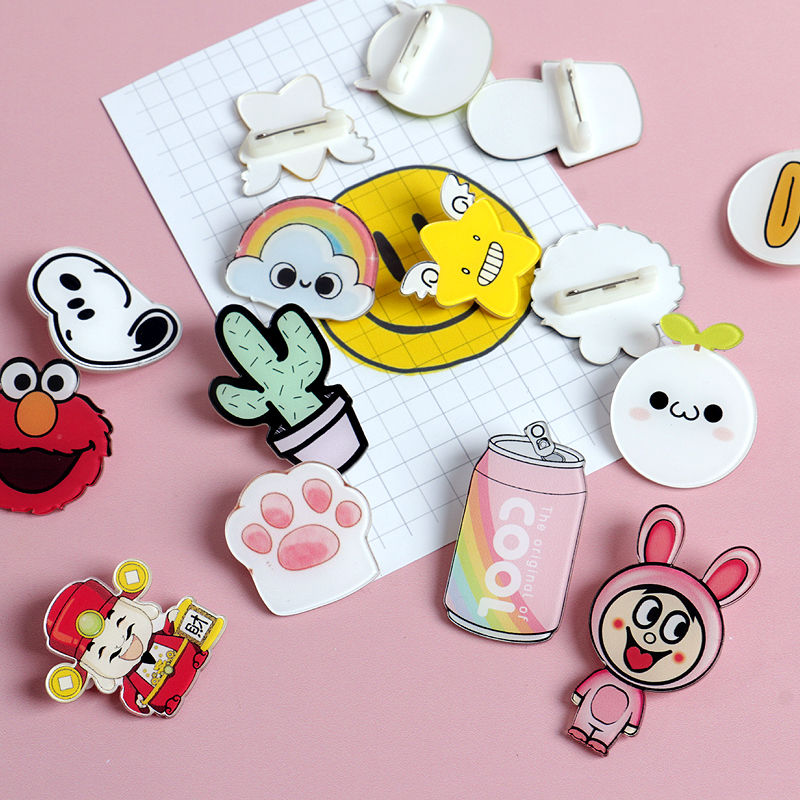

They should treat acrylic pins like a production item, not a craft experiment. That means consistent cutting, clean printing, reliable adhesives, and packaging that prevents scratches in transit.
What should they clarify before quoting?
When working with an acrylic pin manufacturer, they should ask for pin size, quantity, number of designs, printing type, and whether epoxy, glitter, holographic film, or special effects are needed. A quote that arrives without questions often hides assumptions that later become “extra charges.”
They should also confirm packaging needs (individual bagging, backing cards, barcodes) and shipping terms. If the quote does not specify what is included, it is not a real quote.
How can they verify print quality and color accuracy?
They should offer a pre-production proof that shows exact size, bleed, cut lines, hole placement, and a clear preview of how layers will align. For color, they should support Pantone references or provide a practical color-matching process.
They should also explain their print method (UV printing is common for acrylic) and how they prevent banding, dull blacks, or muddy gradients. If they cannot describe how they control color, the results will vary order to order.
What materials and construction details matter most?
They should specify acrylic thickness options, whether edges are polished, and how they avoid sharp corners. Clean cuts and smooth edges are the difference between “merch-grade” and “cheap giveaway.”
They should also explain the back hardware options (rubber clutch, metal butterfly, locking pin, magnet) and what adhesive or mounting method they use. Weak glue or poor surface prep leads to posts popping off.
Which manufacturing capabilities should they have in-house?
They should be able to handle cutting, printing, and assembly with consistent quality control. When everything is outsourced to multiple shops, lead times stretch and accountability gets blurry.
They should also support common upgrades like double-sided printing, clear/transparent areas, epoxy doming, protective film, and custom-shaped backing cards. A manufacturer that can only do one “standard” build will limit design options.
How should they handle sampling and approvals?
They should offer either a photo sample, a physical pre-production sample, or both, depending on budget and timeline. For new suppliers, a physical sample is often worth it because it reveals edge finish, clarity, and real-life color.
They should also define what happens after approval. If changes are requested, they should confirm whether costs or timelines change before production starts.
What are the biggest red flags in communication?
They should respond clearly, in complete sentences, and keep details in one place such as a formal quote or invoice. If they constantly contradict themselves on thickness, pricing, or timelines, the order will not get easier after payment.
They should also be comfortable answering basic process questions. If they avoid specifics or pressure for immediate payment without a proof, that is a signal to walk away.
How can they judge consistency and quality control?
They should be willing to share close-up photos or videos of recent acrylic pin runs, including edge shots and hardware backs. Ideal examples show clean linework, accurate registration, and no cloudy acrylic.
They should also explain their QC steps: checking scratches, alignment, dust under epoxy, bubbles, and post placement. If they do not have a defined QC process, the buyer becomes their QC.
What should they confirm about packaging and scratch protection?
They should confirm whether pins ship with protective film on the acrylic surface and whether each pin is individually bagged. Acrylic scratches easily, and bulk-packed pins can arrive scuffed even if manufacturing was perfect.
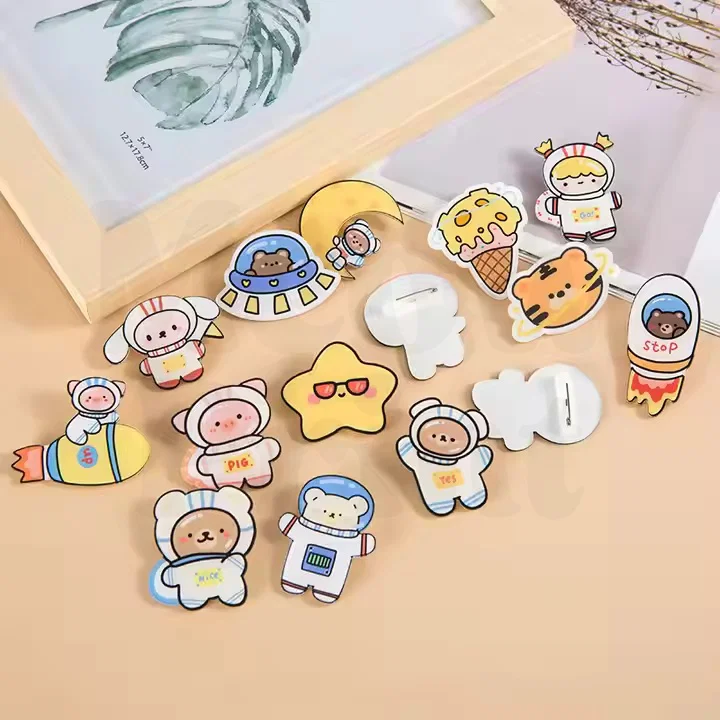
They should also clarify backing card thickness, printing, and whether assembly on cards is included. If cards are required for retail, they should confirm hole spacing and card size early to avoid last-minute redesign. See choosing between enamel medals and stamped medals.
How should they compare pricing without getting tricked?
They should compare like for like: same size, same thickness, same effects, same packaging, and the same shipping method. The cheapest quote often excludes epoxy, individual bagging, or even the correct hardware.
They should also check for setup fees, mold or cut fees, proof fees, and reprint policies. A transparent manufacturer lists all costs upfront and does not surprise buyers at the finish line.
What should they ask about lead times and shipping?
They should ask for production time, QC time, and shipping time as separate numbers. A single “2–3 weeks” promise is not helpful if it ignores customs delays or peak-season congestion.
They should also confirm whether delivery dates are guaranteed or estimated, and what happens if the shipment is late. If the pins are for an event launch, they should plan buffer time and confirm the fastest realistic method.
How should they protect themselves with terms and documentation?
They should keep everything in writing: specs, materials, thickness, quantities, packaging, shipping method, and approval steps. A proper invoice should match the proof and list what is being produced.
They should also understand payment terms and refunds. If the manufacturer offers a remake policy for defects, they should define what counts as defective and how claims are handled with photos and deadlines.
How can they choose the best manufacturer for their needs?
They should pick the manufacturer that communicates clearly, shows consistent sample quality, and confirms specs before taking payment. The right supplier makes acrylic pins predictable: proof, sample, production, QC, and delivery with minimal drama.
They should not choose based on price alone. A slightly higher quote from a manufacturer with strong QC, solid packaging, and reliable timelines often costs less than reprints, delays, and damaged inventory.
FAQs (Frequently Asked Questions)
What key factors should I consider when choosing an acrylic pin manufacturer?
Focus on product quality, clear communication, and predictable delivery. The ideal manufacturer treats acrylic pins as production items with consistent cutting, clean printing, reliable adhesives, and protective packaging to prevent scratches during transit.
What information should a manufacturer clarify before providing a quote for acrylic pins?
They should ask about pin size, quantity, number of designs, printing type, and any special effects like epoxy, glitter, or holographic film. Additionally, packaging needs such as individual bagging or backing cards and shipping terms must be confirmed to ensure the quote is accurate and comprehensive.
How can I verify print quality and color accuracy from an acrylic pin supplier?
Request a pre-production proof showing exact size, bleed, cut lines, hole placement, and layer alignment. Ensure they support Pantone references or have a practical color-matching process. They should explain their UV printing method and how they prevent issues like banding or dull blacks for consistent results.
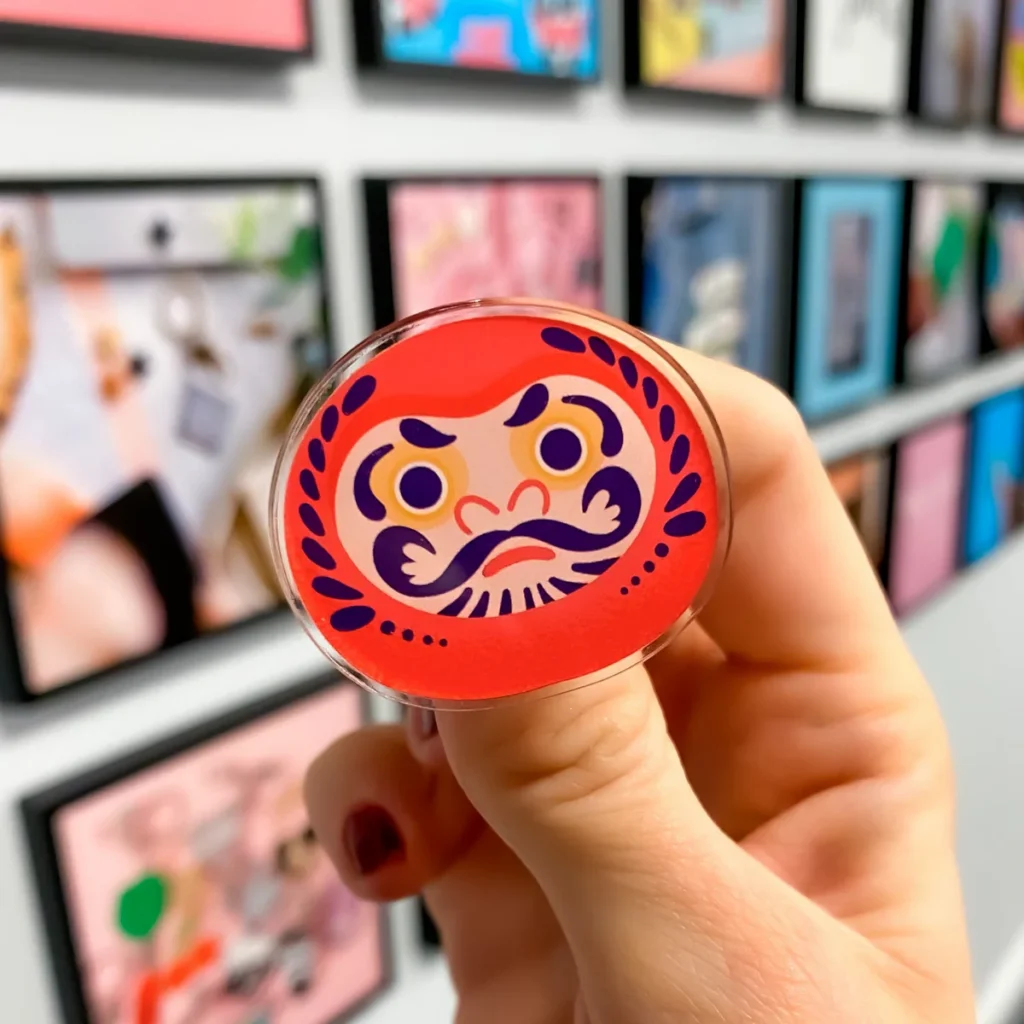
What materials and construction details are important for high-quality acrylic pins?
Confirm acrylic thickness options, polished edges to avoid sharp corners, and clean cuts for a merch-grade feel. Understand the back hardware choices such as rubber clutch or locking pin and the adhesive used; strong glue and proper surface preparation are essential to prevent posts from popping off.
How should sampling and approval processes be handled with an acrylic pin manufacturer?
Manufacturers should offer photo samples or physical pre-production samples depending on budget and timeline. Physical samples help assess edge finish and color accuracy. After approval, any requested changes must be clarified regarding additional costs or timeline adjustments before production begins.
What are red flags in communication when dealing with acrylic pin manufacturers?
Beware if responses lack clarity or consistency on thickness, pricing, or timelines. Avoid suppliers who evade basic process questions or pressure for immediate payment without providing proofs. Clear communication in complete sentences with all details consolidated in formal quotes or invoices is vital for a smooth order experience.